In Franklin Lakes, the hours right after a fire decide whether soot etches surfaces permanently and whether the wet structure starts to mold. We tackle odor with source removal first, then thermal fogging or hydroxyl treatment so the smell does not come back weeks later. A Franklin Lakes home with a central return pulls smoke into the ductwork fast, so the HVAC is always part of our survey. Photos, scope notes, and odor-treatment records become a file your adjuster can sign off on without a fight. Talk to us at 551-237-7447 and the smoke cleanup is underway today.
Where Soot Actually Travels
A fire leaves two problems running at once: what the flames burned and what the hoses soaked. Smoke molecules bond to porous materials at the molecular level, which is why air freshener and ozone sprays only mask the odor until they fade.
We treat odor at the source first, then thermal-fog or hydroxyl-treat so the smell does not return weeks later. We photograph each surface before and after cleaning so the soot work is shown, not merely claimed.
How We Stop The Smell Coming Back
A fire job is not done when the surfaces look clean; it is done when the odor is gone for good. Porous materials that cannot be cleaned to a neutral state are removed rather than sealed over and hoped about.
The HVAC decision is documented either way, so the carrier sees why the scope reads the way it does. The result is a structure that reads clean to the nose, not one that smells fine until the next humid day.
Why We Dry Before We Clean Soot — The Real Picture
After the flames are out, the recovery is partly a water-damage job, because suppression water is everywhere it reached. Wet soot smears and etches the longer it sits, so the moisture has to come out before it sets the residue permanently.
We treat the water side with the same metered discipline as any flood, so the framing dries before mold has a chance. We carry the water side through to verified-dry, so the rebuild sits on sound, dry framing instead of a hidden problem.
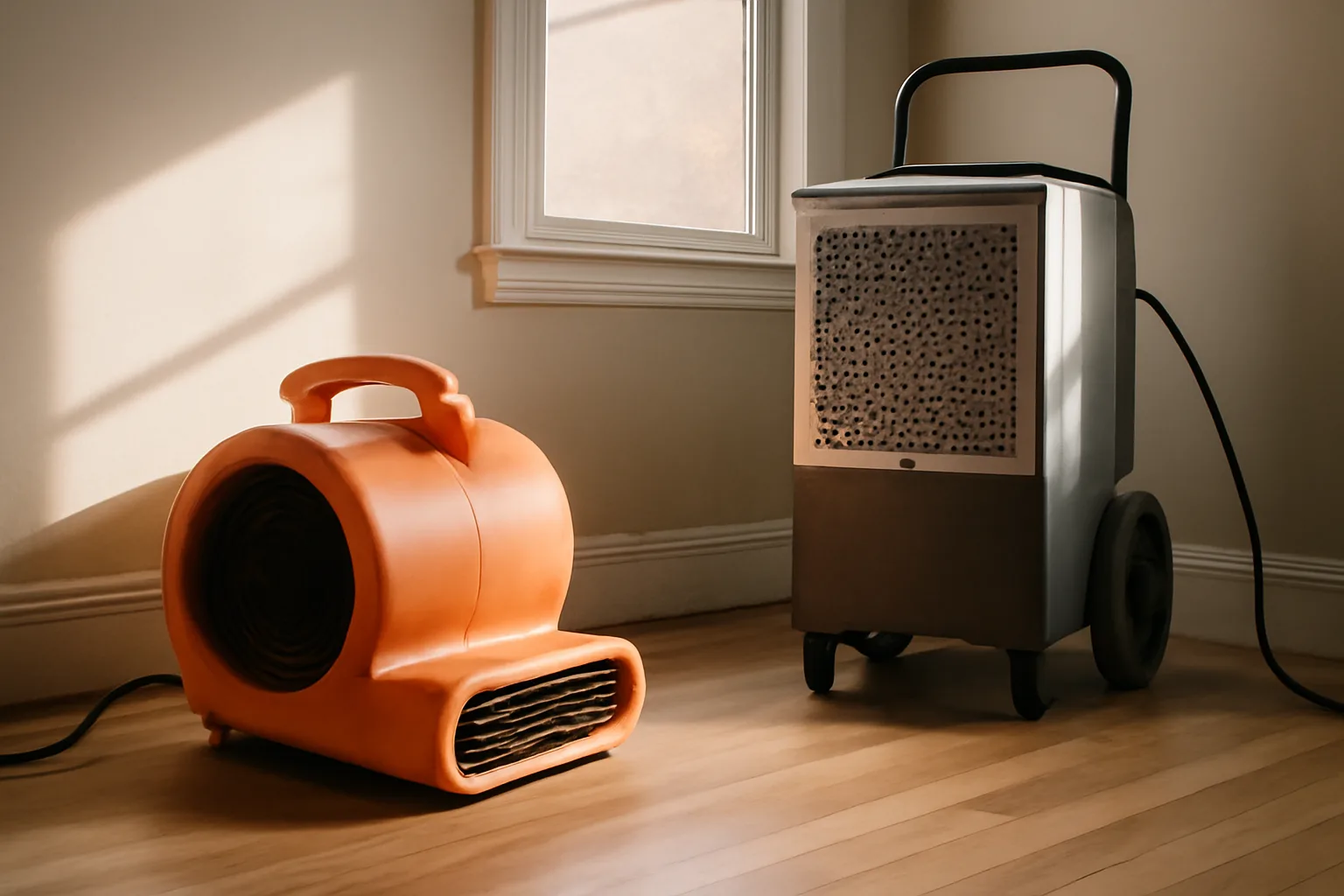
The water used to extinguish a fire saturates framing, drywall, and contents that the flames never touched. Drying the structure properly is half of a fire restoration done right, and the half most owners do not expect. Our crew pulls the water the fire left, sizes drying equipment to the saturation, and tracks the dry-down to standard. The longer the water sits, the more of the building crosses from cleanable to removable, exactly as in any water loss.
What Untreated Soot Costs — No Fluff
Soot is not inert; it is corrosive, and the clock on permanent staining starts the moment the fire goes out. The acidity means a delay of days turns a cleaning job into a refinishing job on the same surfaces.
Our crew matches the cleaning method to each material and treats the residue before it has time to set. The sooner the residue is treated, the more of the home is cleaned rather than refinished or replaced.
Smoke residue continues damaging a home long after the flames are out, etching and staining what it settles on. That is why fire cleanup is urgent in a way the visible burn area does not make obvious. We address the surfaces the smoke actually reached, not just the obvious ones, and we do it quickly. Surfaces that could have been wiped clean on day one often need refinishing or replacement by the end of the week.
Handling Contents The Right Way — In Plain Terms
What is inside the home — furniture, clothing, keepsakes — is part of the loss and part of the recovery. Removing the contents also clears the structure for the soot, odor, and drying work without putting belongings at risk.
We record the salvageable and the unsalvageable both, so nothing in the contents claim relies on memory. Handling contents in-house means there is no separate restoration vendor for the adjuster or the owner to coordinate.
Smoke and suppression water reach the contents of a home as surely as the structure, so they get their own process. That way the belongings side of the claim is as clean and documented as the building side, with no loose ends. Photographs of every packed-out item back the contents portion of the scope, leaving no gaps for the carrier to question. We sort the contents into salvage and loss, clean the salvage in a controlled environment, and record the rest for the claim.
One team for every part of the loss
Water, fire, and storm losses in {city} rarely stay separate — fire damage restoration often overlaps with burst pipe response, storm cleanup, mold cleanup, sewage cleanup, reconstruction, and we handle the overlap so you do not juggle trades. The same documented response goes to and everywhere else across Bergen County.
If you searched for restoration company near Franklin Lakes, When you reach out, one accountable team answers, and we document it from hour one. Call 551-237-7447 any hour, read From Extraction to Dry: The Franklin Lakes Water Loss Timeline on our blog, or head back to our Franklin Lakes home page to see everything we do.